
How Long Should I Expect My Dental Crown to Last?
Table of Contents
- How Long Should I Expect My Dental Crown to Last?
- What Is the Average Lifespan of a Dental Crown?
- Can Dental Crowns Last 15, 20, or Even 30 Years?
- How Long Do Different Types of Dental Crowns Last?
- Porcelain Dental Crowns
- Zirconia Dental Crowns
- Ceramic and E.max Crowns
- Porcelain-Fused-to-Metal (PFM) Crowns
- 7 Factors That Affect How Long a Dental Crown Lasts
- What Are the Signs Your Dental Crown Needs Replacing?
- How Can You Make Your Dental Crown Last Longer?
- What Happens When a Dental Crown Reaches the End of Its Lifespan?
- Can a Dentist Repair a Damaged Crown?
- When Is Complete Crown Replacement Necessary?
- What Happens If You Delay Replacing a Damaged Crown?
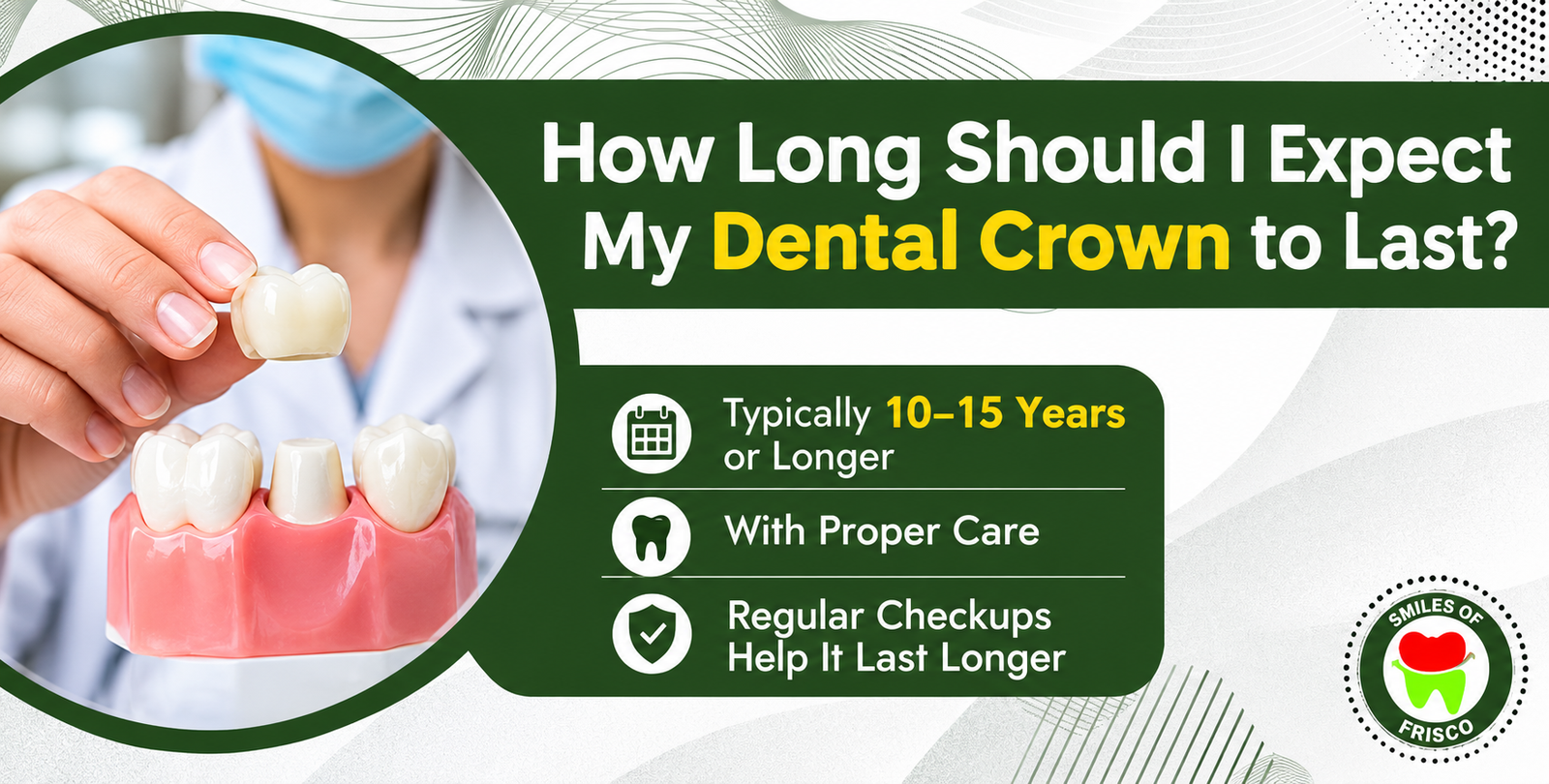
How Long Should I Expect My Dental Crown to Last?
Introduction
While the standard industry benchmark places the average dental crown lifespan at 10 to 15 years, clinical survival data shows that over 80% of modern monolithic zirconia and gold crowns remain intact beyond 20 years, whereas posterior all-porcelain crowns face a noticeably higher fracture rate after the 10-year mark.
A dental crown is a custom, tooth-shaped cap placed completely over a weak or damaged tooth—like a protective helmet.
What Is the Average Lifespan of a Dental Crown?
Most dental crowns last 10 to 15 years—in fact, dental studies show 85% to 90% are still going strong at the 10-year mark. Even though dental insurance typically covers a replacement every 5 to 8 years, your crown can easily last 15+ years with daily flossing and good biting habits.
If you’re considering getting a crown or replacing an older one, Smile of Frisco offers dental crown and bridge replacement in Frisco to restore damaged teeth and help maintain long-term oral health.
Can Dental Crowns Last 15, 20, or Even 30 Years?
Yes—reaching 15, 20, or even 30+ years is clinically common, particularly for specific materials and tooth positions.
How Long Do Different Types of Dental Crowns Last?
Porcelain Crowns in Frisco, TX: Lifespan & Durability
What Is a Porcelain Dental Crown?
A porcelain dental crown is a 100% metal-free, custom tooth cap made of medical ceramic that mimics natural tooth enamel—ideal for front teeth and metal allergies.
Average Lifespan and Durability All-porcelain dental crowns have an average functional lifespan of 10 to 15 years,
Key Advantages of Porcelain Crowns
- Natural Look: Matches real tooth translucency and won’t leave a dark gray line at the gumline if gums recede.
- 100% Metal-Free: Safe for patients with metal allergies and prevents metallic tastes or sensitivity when eating with metal utensils.
- Strong Tooth Bond: Bonds directly to the remaining tooth enamel, reinforcing the weakened tooth from within.
Common Causes of Damage Because porcelain is a rigid glass-ceramic rather than flexible metal, it can chip or crack under heavy pressure:
- Back Molar Fractures: Heavy chewing forces (70–150 PSI) on back molars or untreated nighttime teeth grinding (bruxism) can crack porcelain crowns.
- Edge Chipping: Biting hard items like ice, unpopped popcorn kernels, or fingernails can chip the ceramic edge, often requiring a full replacement.
- Opposing Tooth Wear: If not polished completely smooth after fitting, rough porcelain can gradually wear down the natural tooth biting against it.
Zirconia Crowns in Frisco: Strength, Durability & Lifespan
A zirconia dental crown is a strong, white, metal-free tooth cap made from a durable ceramic crystal. It gives you the toughness of metal while looking like a natural tooth.
Strength and Resistance to Wear
- Built for Heavy Chewing: Zirconia is the strongest tooth-colored crown material—about 3 times stronger than regular porcelain—so it rarely chips or cracks when biting hard foods.
- Protects Nearby Teeth: When polished smooth, it resists daily wear without grinding down the natural teeth it bites against.
- Saves More Natural Tooth: Because it is so tough even when thin, your dentist removes less of your healthy tooth to fit it.
Expected Lifespan and Suitability
- How Long It Lasts: Typically 15 to 20+ years, with over 95% lasting at least 10 years.
- Who It’s Best For: The top choice for back molars (which handle heavy chewing), people who grind their teeth at night, and patients with metal allergies.
Ceramic and E.max Crown Replacement in Frisco, TX
Ceramic and E.max crownsreplacement in frisco offers patients a metal-free tooth caps offering good strength (3–4x stronger than standard porcelain) and natural tooth Porcelain-Fused-to-Metal (PFM) Crowns
A porcelain-fused-to-metal (PFM) crown has a strong metal inner core covered by a tooth-colored porcelain outer layer, combining metal durability with a natural white appearance.
Average Lifespan: PFM crowns last 10 to 15 years, with clinical studies showing 85% to 90% surviving past 10 years and many lasting 20+ years with good oral care.
7 Factors That Affect How Long a Dental Crown Lasts
- Oral hygiene and daily dental care.
- Teeth grinding and jaw clenching (bruxism).
- Crown material and quality.
- Dentist’s experience and crown placement.
- Gum health and underlying tooth condition.
- Eating hard or sticky foods.
- Regular dental checkups and professional cleanings.
Signs of a Damaged or Failing Dental Crown
- Cracks, chips, or visible damage.
- Loose or shifting dental crown.
- Pain or sensitivity around the crowned tooth.
- Dark lines around the crown.
- Gum inflammation or recession.
- Food frequently getting trapped around the crown.
- Bad taste or persistent discomfort.
If you notice any of these signs, don’t ignore them, especially if you experience pain, swelling, or a loose crown. Smile of Frisco provides dental care in Frisco to help address urgent dental problems before they worsen.
How Can You Make Your Dental Crown Last Longer?
- Brush twice daily with fluoride toothpaste.
- Floss carefully around the crown.
- Avoid chewing ice and hard objects.
- Limit sticky foods that can affect crown placement.
- Wear a nightguard if you grind your teeth.
- Schedule regular dental checkups.
- Address gum disease and tooth decay early.
What Happens When a Dental Crown Reaches the End of Its Lifespan?
Can a Dentist Repair a Damaged Crown?
Minor damage can often be repaired in a single visit without replacing the whole crown:
- Small Porcelain Chips: Smoothed and polished, or patched with tooth-colored composite resin (though bonded patches on heavy-chewing molars last 2 to 5 years).
- Loose Crown (Intact Tooth): If the crown falls off intact and the tooth underneath has no decay, a dentist can clean and re-cement it.
If your crown becomes loose, breaks, or causes sudden pain, seeking timely dental care can help prevent further damage. Smile of Frisco offers emergency dental care in Frisco, TX for urgent dental concerns.
When Is Complete Crown Replacement Necessary?
Full replacement is required when structural protection is compromised:
- Decay at the Crown Margin: Cavities forming along the gumline seam where the cap meets the tooth (the #1 reason for replacement).
- Deep Cracks or Split Crown: Fractures exposing the inner metal core or underlying tooth dentin.
- Persistent Looseness or Pain: Indicates cement washout, bite misalignment, or nerve inflammation beneath the crown.
What Happens If You Delay Replacing a Damaged Crown?
Waiting too long turns a straightforward crown replacement into a more complex procedure:
- Hidden Tooth Decay: Bacteria enter through microscopic gaps, silently decaying the natural tooth structure beneath the cap.
- Root Canal Infection: Untreated decay reaches the tooth pulp, causing severe pain, abscess, and requiring a root canal before a new crown can fit.
- Tooth Fracture or Extraction: Once too much natural tooth rots away, the tooth can split below the gumline—requiring extraction and a dental implant or bridge.
Conclusion
Dental crowns can last 10 to 15 years or even longer with proper care, the right crown material, and regular dental checkups. Recognizing early signs of damage and replacing a worn crown at the right time can help protect your natural tooth and prevent more serious complications. If you’re experiencing crown-related problems, Smiles of Frisco is here to help you restore your smile with personalized dental care. Call us at (469) 598-1042 to schedule your appointment and discuss your dental needs.
Frequently Asked Questions About Dental Crown Lifespan
Can a dental crown last a lifetime?
Yes, a dental crown—especially gold or monolithic zirconia—can last a lifetime (30+ years) with excellent daily gumline hygiene, regular dental checkups, and protection against teeth grinding.
Which dental crown material lasts the longest?
Gold crowns last the longest at 20–30+ years (often a lifetime) without cracking, while monolithic zirconia is the longest-lasting tooth-colored option at 15–20+ years.
Can you get cavities underneath a dental crown?
Yes. Even though the crown cap itself cannot get a cavity, the real tooth underneath it can still decay—usually right along the gumline where the edge of the crown meets your natural tooth, if plaque and food get trapped there.
Should I replace my dental crown if it doesn’t hurt?
Not necessarily—if your dental crown doesn’t hurt and shows no signs of looseness, cracks, or hidden decay at the gumline, it does not need to be replaced based on age alone.
Leave a Reply